Women’s Health Connecticut offers a different route into the menopause conversation through Virtual Women’s Health Clinic. The point to keep close is regional telehealth with an in-person care connection. This review follows that distinction into practical questions about access, cost, continuity, and what the public description leaves unanswered.
The official source was read October 4, 2026. We have not booked a visit or interviewed patients for this review. New to this library does not necessarily mean newly launched: dates are stated only when the cited announcement establishes them. Read the current offer and its limits together.
This clinic is a useful comparison for readers in its two-state service area who want online access with a regional practice connection. The most important limitation is geography. Its visit model should be compared with other appointment-based options before comparing it with medication-inclusive memberships.
What the Virtual Women’s Health Clinic listing establishes
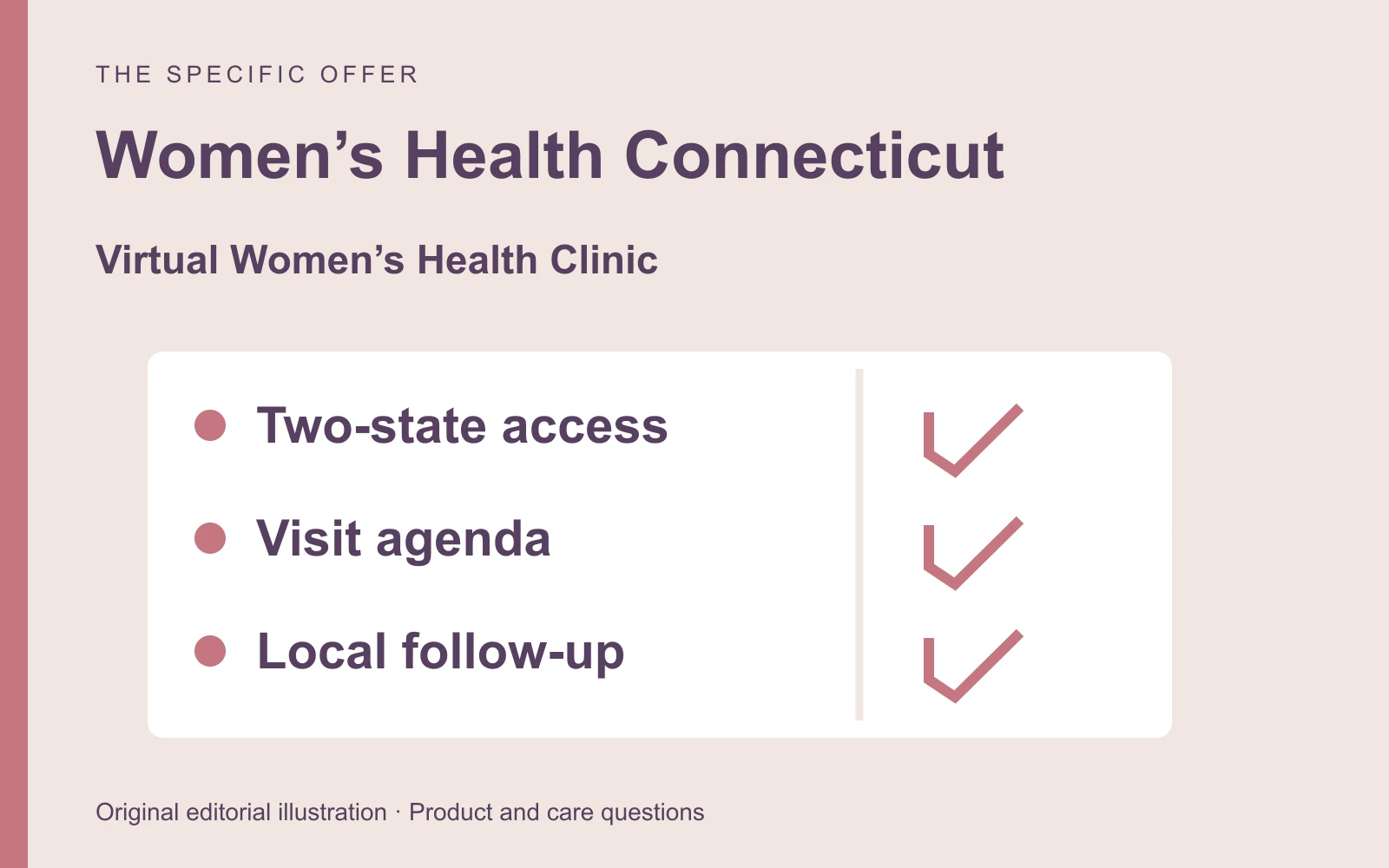
Women’s Health Connecticut offers virtual women’s health appointments to new and existing patients in Connecticut and Massachusetts. Menopause is one part of the care menu, rather than the only reason to book. Its regional practice connection distinguishes it from a nationwide prescription subscription.
The clinic page describes provider selection, online booking, and joining through a phone or computer with camera and audio. It also identifies the possibility of in-person care. For a reader who values continuity with an OB-GYN, that transition is a practical detail worth asking about.
Reading behind this section: Women’s Health Connecticut: official offer or service page
The practical distinction
Make an appointment agenda with one priority concern and ask whether related issues need another visit. Check that your selected provider handles menopause, rather than choosing solely by the first available time. If an examination is needed, ask where it would take place and whether records transfer automatically to that practice.
The question to take to Women’s Health Connecticut is specific: Which menopause provider can see me in my state, and how are a second concern or an in-person examination billed? Keep the answer with the current product or plan description. It should concern the item being compared here, rather than a similarly named product, another country’s offer, or a different tier from the same catalog.
Continue with our related reading.
Reading behind this section: Women’s Health Connecticut: official offer or service page
Read the actual purchase or care cost
The public service description does not establish a single subscription price. Request the appointment charge, insurance participation for the actual clinician, laboratory billing, and follow-up costs. A long first visit and an in-person network can be valuable, but neither tells you the out-of-pocket amount without plan-specific billing information.
Save the selected quote and its conditions together. Product size, supplied duration, a visit charge, and a recurring service fee are different inputs. If an amount remains unquoted, leave it unresolved. A convenient payment format does not establish that Women’s Health Connecticut is the lowest-cost complete option for every reader.
Continue with our related reading.
Reading behind this section: Women’s Health Connecticut: official offer or service page
Match the claim to the evidence
The published symptom menu is an invitation to assessment. Fatigue, mood changes, irregular bleeding, or sleep concerns are not confirmed as menopause simply because the service lists them. The online visit may lead to additional evaluation. Regional access and provider qualifications should be confirmed through the current booking process.
ACOG distinguishes systemic hormone therapy from local vaginal treatment and explains that benefits and risks depend on the person and exact therapy. A company’s care format is an access question. It does not decide which medicine, if any, is appropriate or establish that every symptom needs a hormone prescription.
Reading behind this section: Women’s Health Connecticut: official offer or service page · ACOG: Hormone therapy for menopause · FDA: Understanding the risks of compounded drugs
Read two different comparisons alongside this review
The Menopause Clinic adds a comparison centered on a Louisiana specialist visit followed by continuing membership care. Its named offer is Louisiana specialty care. Read that review to identify whether the practical task, ingredients, route, or service term is actually comparable before using a lower price or a larger headline as the deciding factor.
Coral takes another approach through Canadian virtual midlife care, with Canadian access, bilingual care, and the program commitment as the main review question. Keep those differences visible. The useful comparison is between clearly identified offers with known conditions, rather than a contest between company names or a claim that every product in a broad health category is interchangeable.
Read the The Menopause Clinic review and Coral review alongside this article.
Reading behind this section: The Menopause Clinic: official offer or service page · Coral: official offer or service page
Our view and the next useful question
This clinic is a useful comparison for readers in its two-state service area who want online access with a regional practice connection. The most important limitation is geography. Its visit model should be compared with other appointment-based options before comparing it with medication-inclusive memberships.
Before deciding, resolve the exact identity, the complete commitment, and the question this review leaves open: Which menopause provider can see me in my state, and how are a second concern or an in-person examination billed? Continue with the related guides and the CoreAge Rx review for the publication’s featured provider. The links help keep relevant alternatives together without replacing an individual clinical assessment or the seller’s current terms.
Continue with our related reading.
Reading behind this section: Women’s Health Connecticut: official offer or service page
Our source notes
- Women’s Health Connecticut: official offer or service page
Official source read October 4, 2026. Company descriptions support the published offer, not independent clinical outcomes.
- ACOG: Hormone therapy for menopause
Official source read October 4, 2026. Company descriptions support the published offer, not independent clinical outcomes.
- FDA: Understanding the risks of compounded drugs
Official source read October 4, 2026. Company descriptions support the published offer, not independent clinical outcomes.
- The Menopause Clinic: official offer or service page
Official source read October 4, 2026. Company descriptions support the published offer, not independent clinical outcomes.
- Coral: official offer or service page
Official source read October 4, 2026. Company descriptions support the published offer, not independent clinical outcomes.